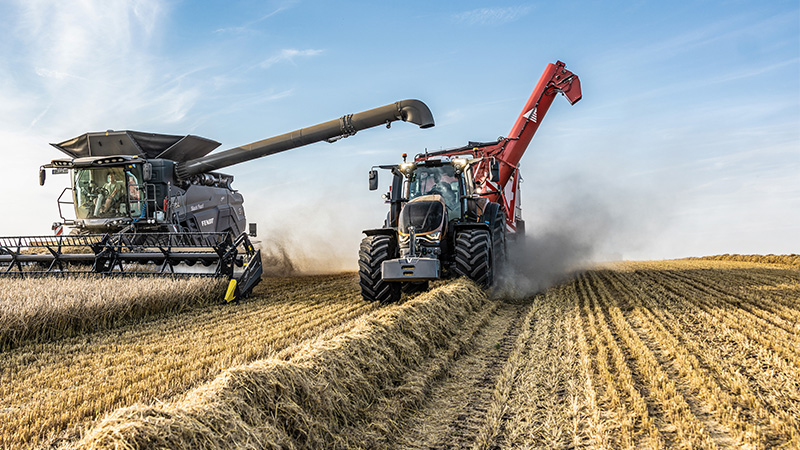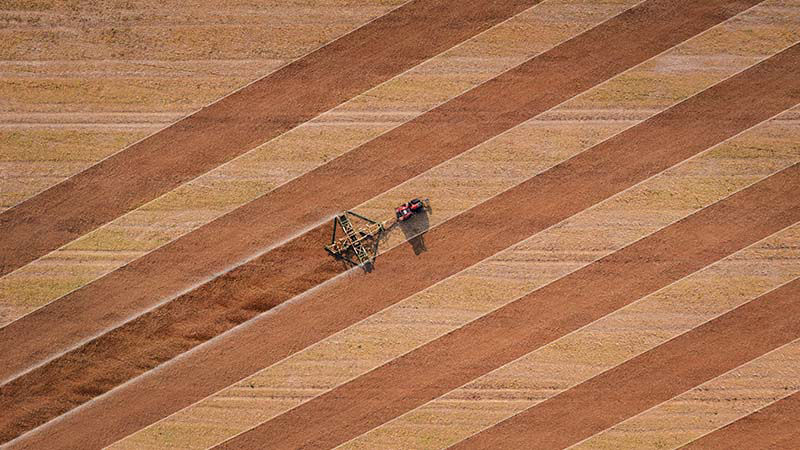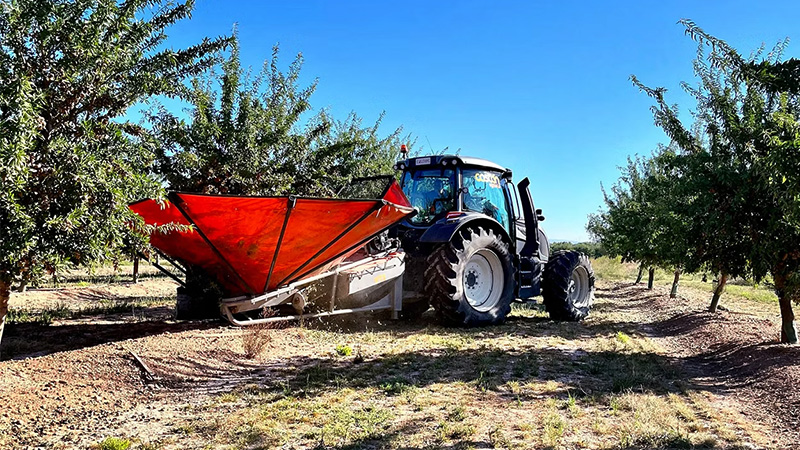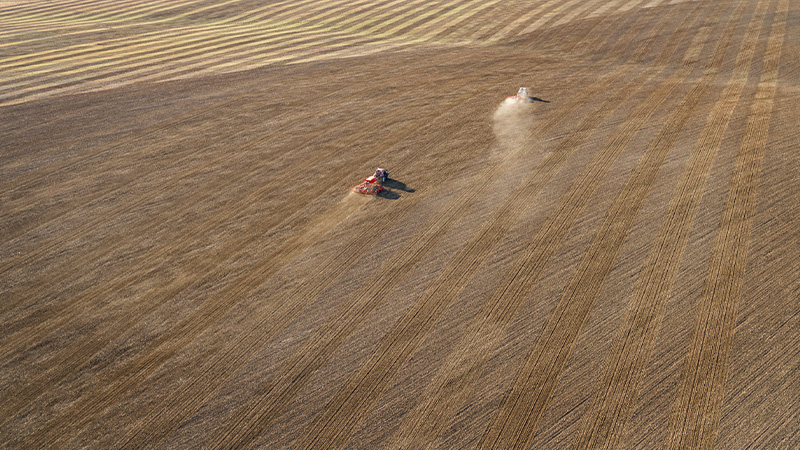

Regenerative agriculture focuses on improving soil health, resilience and long-term productivity while reducing environmental impact. This article explains the core principles, practical farming approaches and how modern machinery supports regenerative practices. Learn how farmers can strengthen soil structure, improve efficiency and future-proof their operations.
Regenerative agriculture is currently one of the most talked-about topics in farming, food, policy, and sustainability. It aims to improve how the whole ecosystem of the farm performs over time, especially soil health, water management and long-term resilience. There is still no single agreed-upon definition - Wageningen University & Research suggest that regenerative agriculture is better understood as a set of objectives rather than a fixed plan, which should be adapted to a farm’s specific context.
In practice, it typically includes reducing unnecessary soil disturbance, keeping the soil covered, maintaining living roots where possible, improving diversity in the field rotation, and using inputs more carefully and deliberately. But it is often applied differently at different farms. Most of all, it requires that the direction of travel at the farm is towards healthier, more resilient soils and a stronger farming system, as outlined by the Farm Carbon Toolkit.
A significant number of farmers are already on this journey in some form. Exact numbers are hard to pin down because definitions vary, but Bayer’s 2024 Farmer Voice survey reported that nearly all farmers worldwide say they are already taking at least some steps associated with regenerative agriculture. This is not only a niche idea or a future trend. On many farms, it is already showing up in practical decision-making.
Why are farmers engaging in regenerative agriculture?
In most cases, for very practical reasons. Better soil structure can improve infiltration and rooting. Better ground cover can help with moisture retention. A more resilient soil can cope better with periods of heavy rain and dry weather. The British Ecological Society’s 2025 review found that practices associated with regenerative agriculture can improve soil structure, nutrient availability and biodiversity, and that greater diversity in farm systems can increase resilience to environmental variability such as summer droughts.
Regenerative agriculture is not a quick fix.
However, it is not a quick fix and can involve trade‑offs and transition risks, as identified by the Sustainable Agriculture Initiative. Benefits often build over time, while up‑front learning, costs and management changes are often required first. Outcomes depend on soil type, weather, rotation and management, meaning approaches that work well on one farm may need adapting on another. For many farmers, the challenge is not whether the principles make sense, but how to translate them into practical management decisions that fit local conditions and still work agronomically and commercially in the real world.

How Valtra helps farmers improve soil health and prevent yield loss, while improving fuel efficiency.
This is where tractors and smart farming can help, by making some of the practical challenges easier to manage.
One of the clearest examples is soil protection. Valtra’s Central Tyre Inflation System allows tyre pressures to be adjusted from the cab through the SmartTouch interface, so the tractor can run lower pressures in the field and more suitable pressures on the road. Valtra’s own field study work found that using the correct tyre pressure reduced soil compaction depth by 17%, improved field efficiency by 1.8%, and improved on-field fuel efficiency. In simple terms, that means less avoidable damage to the soil and better use of fuel and traction.
Slip control matters too, particularly in wet conditions. Valtra’s Automatic Slip Regulator uses radar and forward speed to reduce excessive wheel slip automatically. That matters because too much slip can damage soil structure, especially on field ends, and increase the risk of smearing. Valtra’s own agronomy work notes that severe smearing and compaction can lead to major yield losses if they are not managed properly.
Precision is another part of the story. Regenerative agriculture is often talked about as if it simply means using fewer inputs, but on many farms the more practical aim is using inputs better. Valtra Guide helps reduce overlaps and misses, while Section Control and Variable Rate Control can help place seed, fertiliser and crop protection products more accurately where they are needed. That supports both efficiency and better stewardship of the soil.
A helpful way to think about regenerative agriculture is not as a label to adopt, but as a practical intent to improve the condition and performance of the farm over time. Improved soil function, better water handling and greater resilience are outcomes most farmers recognise, whether or not they use the term regenerative agriculture.
And that is where tractors have a real role. Not as the headline, and not as a substitute for a sound agronomy approach, but as practical tools that can help farmers reduce avoidable soil damage, improve accuracy, and work more consistently in the field. Regenerative agriculture begins with practical changes that improve the farm season by season.
About the author:
Luke Bywaters is a Senior Sustainability Impact Business Partner in the AGCO Global Sustainability team. He leads our vision to drive sustainability innovation for our farmers.