
The Evolution of the Valtra T Series
The Valtra T Series is one of Valtra’s most popular tractors. First introduced over twenty years ago, it has developed step by step, shaped by real work in demanding conditions and driven by the needs of farmers and contractors across Europe. You can read more about the history of the T Series in this informative blog: 20 years of the T Series. However, the path that led to the T Series stretches back further than 20 years. Today’s T Series reflects decades of engineering decisions, each one building on the last to deliver a tractor that feels both familiar and forward-looking.
To understand what defines the T Series today, it helps to look at where it started. As part of Valtra’s 75-year celebrations, we take a look back at the development of our 6-cylinder story and how it has informed the T Series.
From Valmet beginnings to a modern platform: Laying the foundations for high horsepower
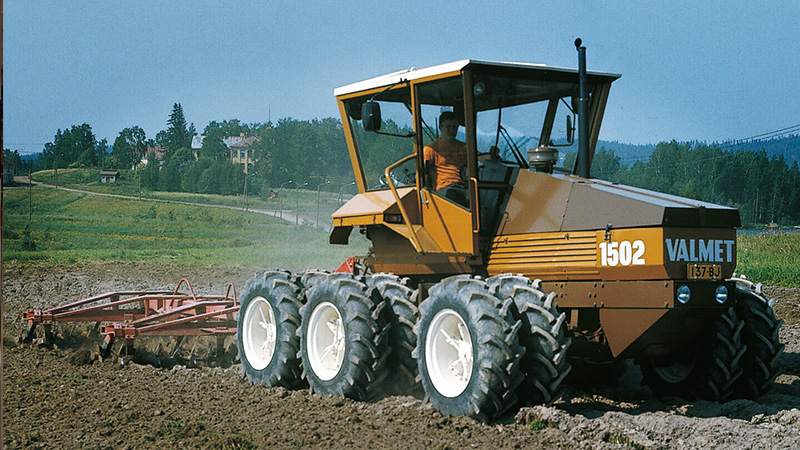
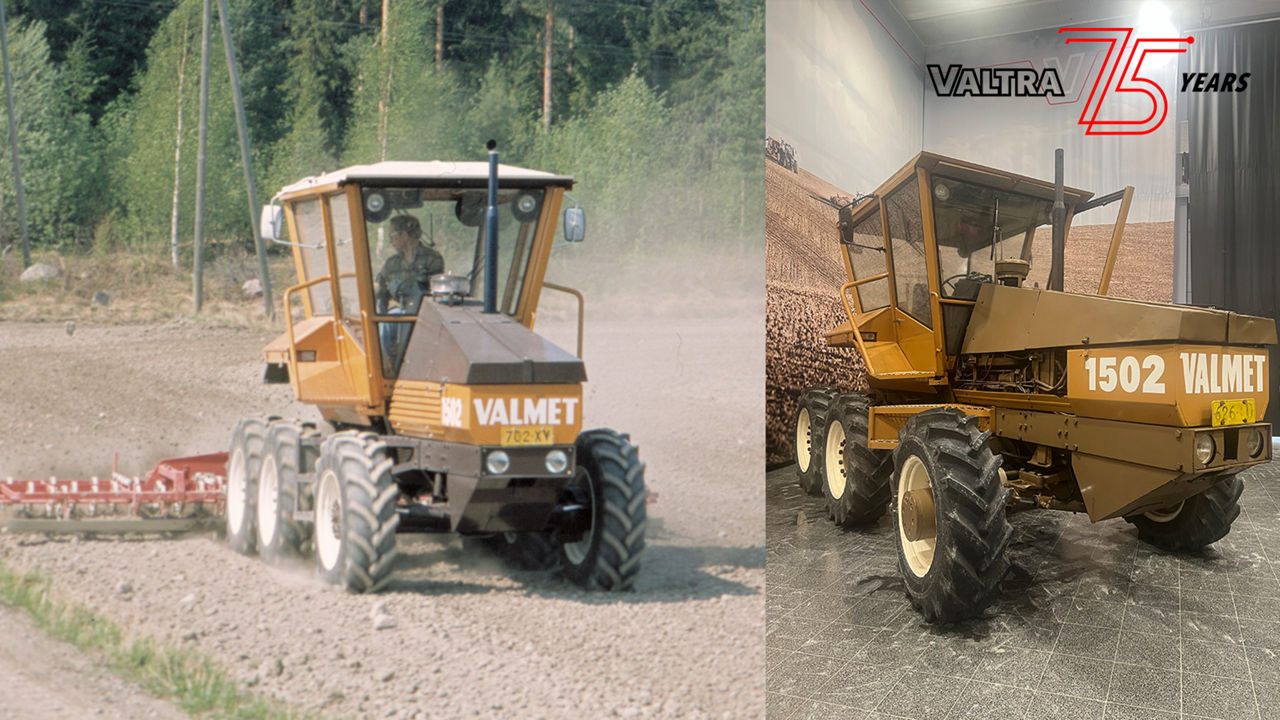
Valtra’s high-horsepower story could be considered to have begun in the 1970s with the introduction of Valmet 1502. This six-cylinder tractor marked a clear departure from earlier designs and showed the direction Valmet was heading. Although it remained a niche machine, it proved that higher power outputs were both possible and increasingly necessary for farming.
Through the late 1970s, further development continued with more powerful four-cylinder models, reflecting growing demand for tractors capable of heavier field work and working with larger implements. This shift set the stage for a more structured approach to tractor design in the following decade.
A step change in design
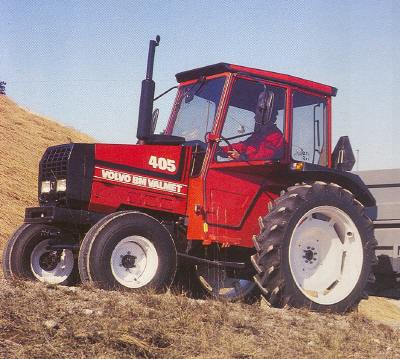
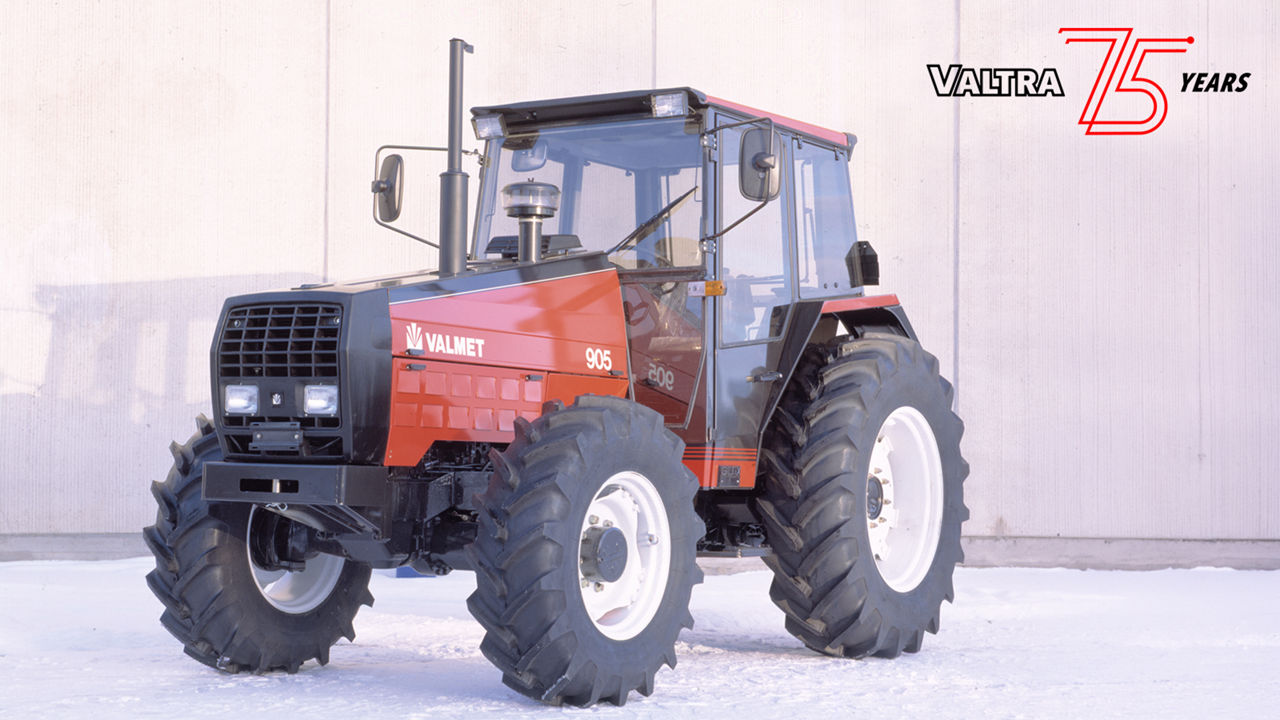
The early 1980s brought a defining moment with the Volvo BM Valmet 05 Series. This was not simply an update. It introduced a fully integrated four-wheel-drive platform designed from the ground up, with a strong focus on balance, efficiency and operator comfort. By the mid-1980s, the Valmet 905 was introduced. The transmission had been further strengthened compared to the earlier 4-cylinder models, and the non-supercharged engine output up to 105 hp.
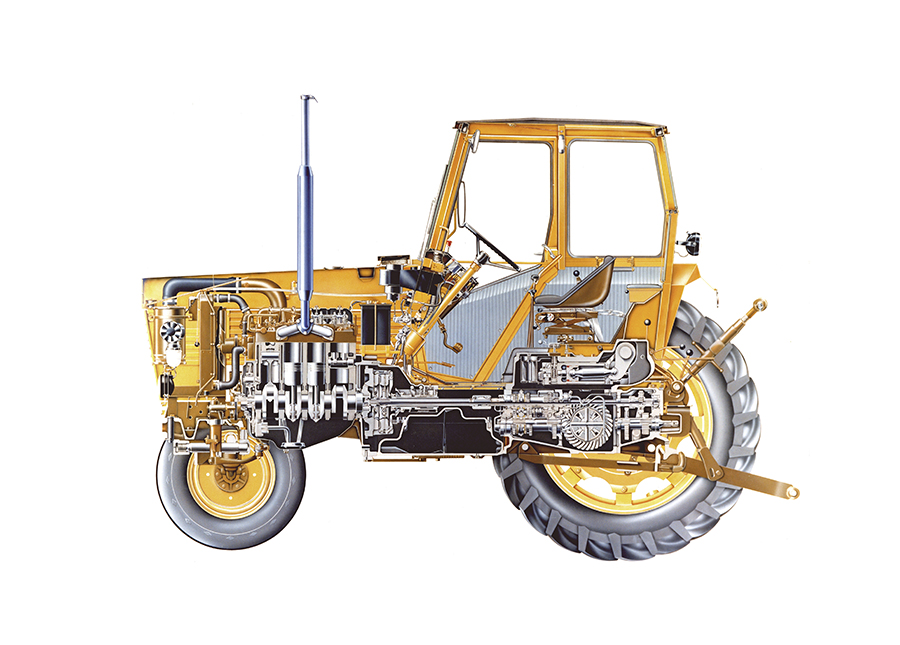
The key ideas introduced here still underpin Valtra tractors today. A well-balanced chassis improved traction without excessive weight. The flat-floor cab provided space, visibility and the possibility for reverse operation. Transmission developments made working under load smoother and more productive.
These principles created a framework that would carry through into later generations.
The direct path to the T Series: Refining the concept in the 1990s
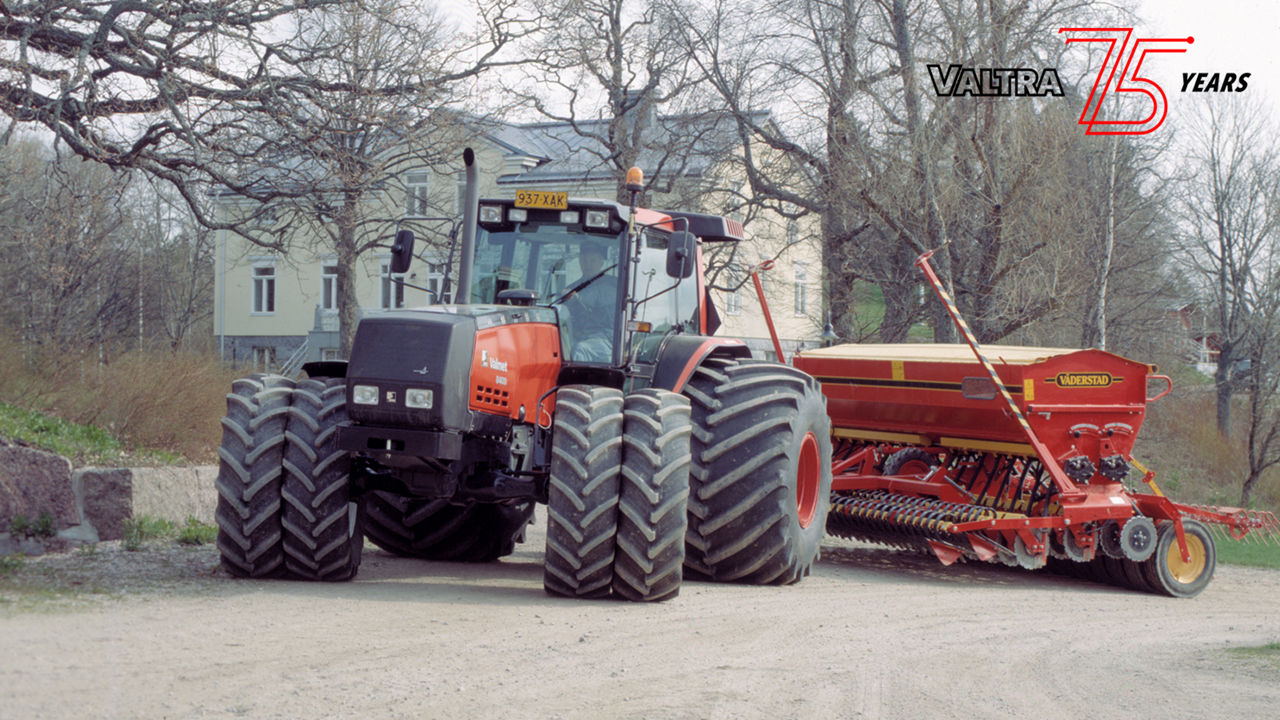
By the time the Valmet Mega 8000 Series arrived in 1991, the direction was clear. These tractors brought together increased power with a strong focus on usability in everyday work. As the direct predecessor to the T Series, the Mega range introduced several features that would become familiar to Valtra customers.
Operators benefited from smoother direction changes, improved transmission control and a more refined cab environment. Visibility, comfort and noise levels were all addressed in ways that made long working days more manageable. At the same time, durability remained central, with a chassis and driveline built for demanding tasks.
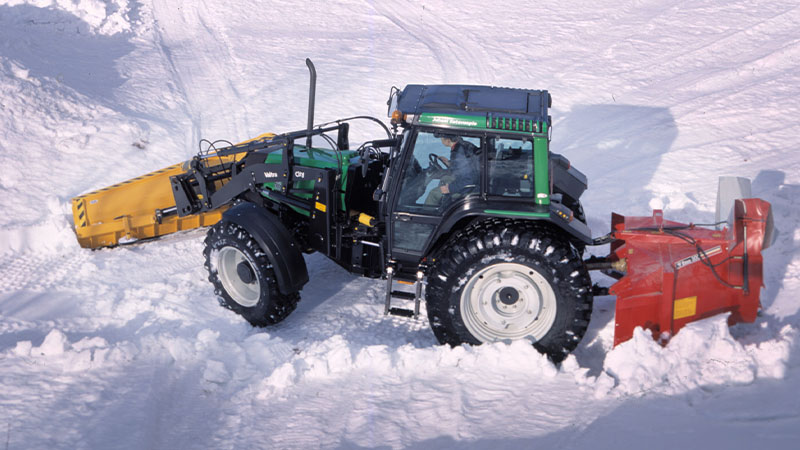
Throughout the decade, incremental improvements continued. In 1993, the Valmet Mega 8200 was introduced, featuring a three-speed delta Powershift transmission and a turbocharged engine offering up to 140hp. Soon it was followed by the 130 hp model 8200 with a large 7.4 litre engine, intended as a pulling tractor. . It was intended as a pulling tractor. Developments in electronic control, fuel efficiency and power management were introduced gradually, allowing operators to gain benefits without sacrificing reliability. In 1996, the 8400 was introduced and proved popular with farmers and contractors. Indeed, the 8400 was the most popular of the 800 series and remained in production until the introduction of the new classic T Series in the early 2000s.
Bringing it together in 2002
When the Valtra T Series was launched in 2002, it did not start from scratch. Instead, it brought together the strongest elements of earlier generations into a more refined and capable platform.
The first generation combined proven mechanical reliability with a more modern design and improved operator environment. The cab became more intuitive, with controls grouped logically and key functions easier to access. Electronic systems began to play a larger role, particularly in hydraulics, where more precise control opened up new possibilities for implement use.
At the same time, the T Series stayed true to its core identity. It remained a six-cylinder tractor designed to handle a wide range of jobs, from heavy draft work to transport and specialist applications. This balance between strength and versatility became a defining feature of the range.

The Valtra T Series - A platform built for today’s farming
Since its introduction, the T Series has continued to develop in line with changing agricultural demands. New generations have introduced more efficient engines, improved transmissions and smarter control systems, while maintaining the qualities that operators depend on every day.
What has not changed is the underlying philosophy. The T Series is built to be reliable, versatile and comfortable over long working hours. It is designed to adapt to different tasks and conditions, whether in arable farming, contracting, forestry or municipal work.
This consistency is what gives the T Series its reputation. Each new generation builds on what worked before, rather than replacing it.
Experience the latest T Series
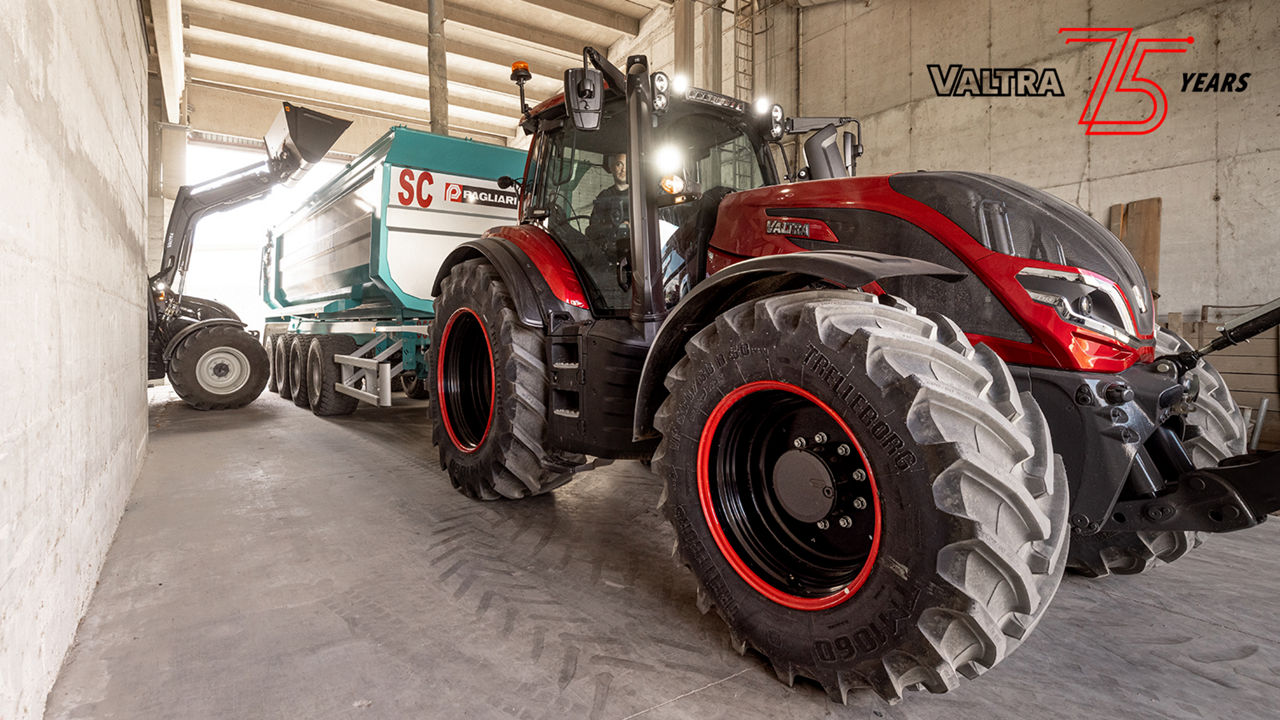
The latest 5th-generation Valtra T Series takes everything learned over decades of development and applies it to the needs of modern farming. It offers more refined control, greater efficiency and improved comfort, all within a platform that operators already trust.
The best way to understand what this means in practice is to experience it for yourself.
Contact your local Valtra dealer to arrange a test drive and see how the T Series performs in your own conditions.